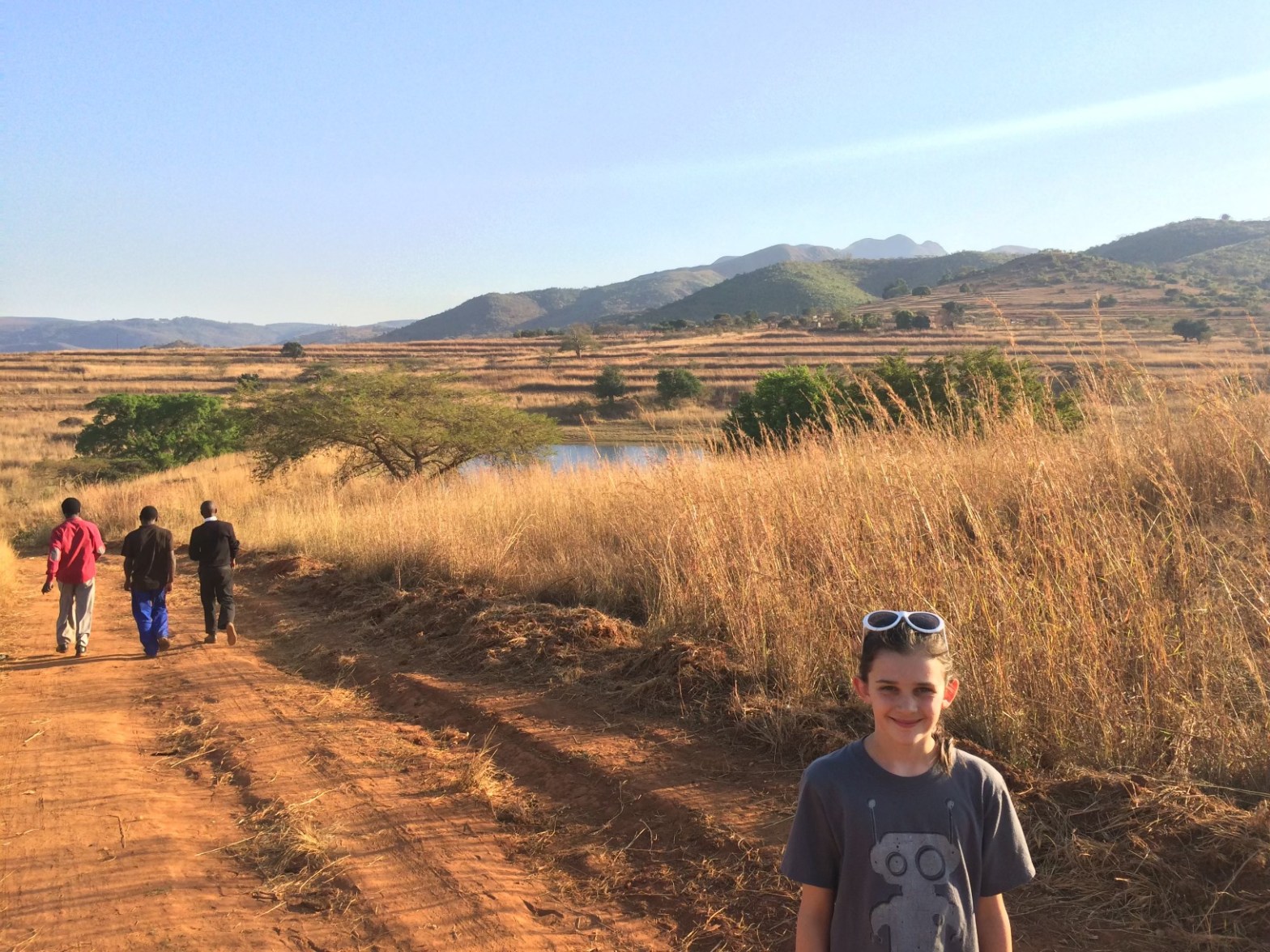
This is the true story of an impactful moment from my mission trip to Swaziland in 2015.
The soft crunching of boots was the only sound heard as we made our way through the African landscape. The sun was miles high but seemed to hang closer than ever. Sweat dripped off of the twenty or so people walking single file through the high dry grass. I watched my feet closely, following one after the other. The person in front of me stopped and I looked up and saw a row of huts made from clay and straw. We had reached the village.
“Alright, everyone! Make sure things of value are put away and stick together,” Krista yelled so that the people in the back could hear. We followed closely and watched as people peered out of their huts at us.
“Karibu, Karibu,” a man greeted us in siSwati. He began to lead us throughout the small village. I was eleven years old, the youngest amongst our group. My mom was behind me and seventeen-year-old Mckenna was in front. The red dirt was everywhere, staining everyone’s clothes, ours included. The huts were meticulously handcrafted and each held one room. The women stood at doorways with children peeking around their legs. Men walked beside us with bundles of supplies and teenage girls carried water in big containers on their heads. Some little boys were playing soccer with a homemade ball made of rags and they passed right in front of us. The villagers started to follow us as we made our way to the back of the village, towards the poorest of the poor. They curiously chatted in siSwati about why the white people had come. This town was so far removed from the rest of Swaziland that we had to hike to get here, for no cars could make it. They had never before seen outsiders, let alone white people.
“Here. He is here,” our guide directed us in broken English. We looked upon a very small and crumbling hut with no door. A very old man appeared, hobbling as he pulled the thinnest arm I had ever seen. The arm was attached to the thinnest form of a boy and everyone fell silent at the sight. He was dragged outside, naked, and barely alive. We sat down in a circle around the hut and Krista and Michelle presented large bags of rice, beans, flour, and a bag of sugar to the old man and boy. Then, they took the wheelchair we brought and presented that too.
“Dear heavenly father,” Jolene began to pray. “Please, heal this boy, Lord.” I looked around at our group. Our hands held one another’s and our heads were bowed. I stared at the boy. I couldn’t help it. Some villagers still watched and they stared at our prayer circle. The boy was crippled and his bones jutted through his thin frame. His head held bash marks and he began hitting his head against the side of the hut. His lips were so parched, I feared he had never felt water upon them. The only clothing on him was a torn, dusty blue shirt that did nothing to cover his genitals. Mckenna began to cry. We prayed over him and asked God to be merciful.
People in small, poor countries in Africa, do what they must to survive. Only working members of society get food. The old man and the crippled boy got what scraps were left. They barely ate and were starving to death because they couldn’t work. The boy was lying on his deathbed and us missionaries heard it. We brought what we could, but when we looked into his hollow eyes, we knew it was over. So we mourned for him and his life that had barely started.
I will always remember that hollow look of death knocking on the door. The life being drained out of someone so young and innocent. How the village rejoices, now that they have more food for the rest of them. The way a grandfather grieves the loss of his grandson, the last person to look after him. The way the disabled and old are treated. Eleven years old, and already, I’m learning a valuable lesson. Poverty breaks people, but it rarely shatters. Death shatters every single time.
We got up and walked back through the town, the boy desperately holding on to each breath. He died one week later and life went on. I will never forget the boy whom I call “Kamili” (perfect). For he was perfect to me.
 EMILY DICKINSON